3D printing in (behaviour) science
Recently, my wife designed a behaviour experiment where a decoy poison dart frog individual was necessary. That is, we needed a body of a frog to be present when other stimuli were being presented to the target individual. We tried looking for commercial poison dart frog models online, but we weren’t very successful. I had recently bought a 3D printer (an Ender 3), so we decided to try the good ol’ DIY approach a try.
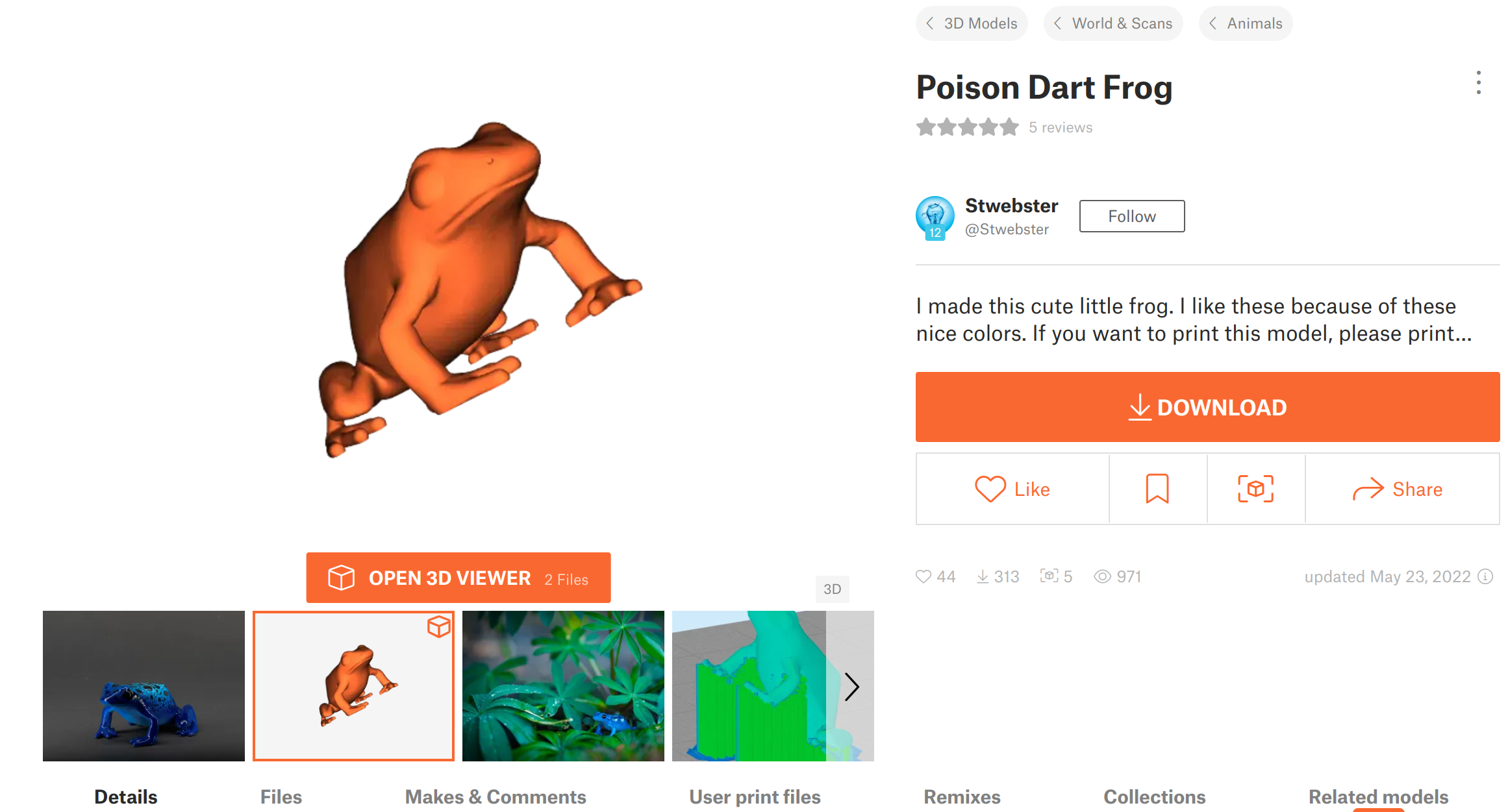
We searched 3D file websites for all kinds of poison frog shaped models. At the time we weren’t very successful at finding a super accurate model either. We settled for this model. The body volume seemed too high, and the hind legs seemed too short, but we went for it anyway. As I’m writing this (a year and a half after the experiment itself), I have found some more accurate models like this one on myminifactory.com and this one on sketchfab.com.
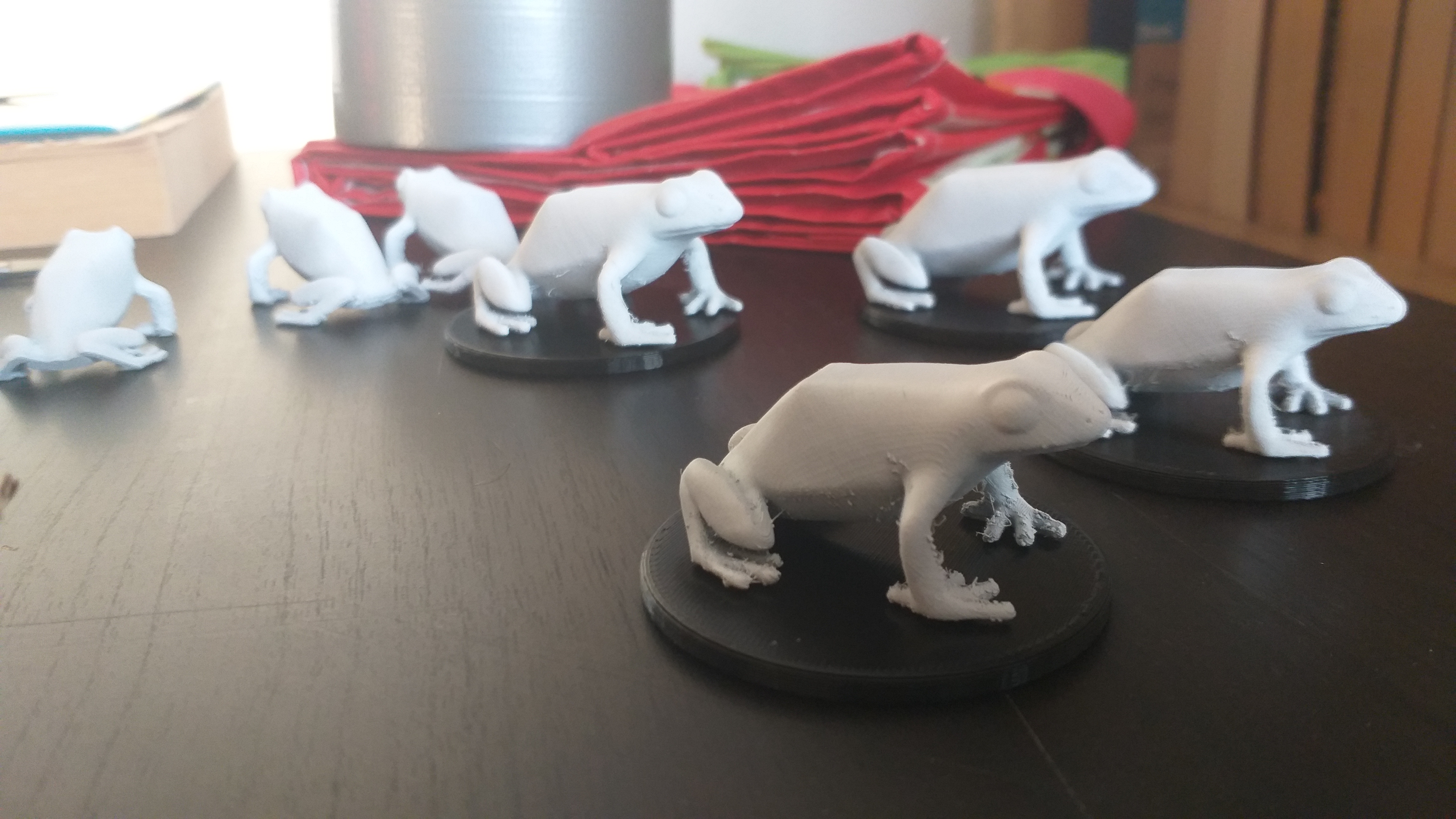
Once we had a good enough model, we started looking at the populations of frogs that would be used in the experiment. Although only one species was used in the experiment (Dendrobates tinctorius), it has an extraordinary variability of sizes and colours between locations. Since four different locations were going to be used, we had to print these models at four different scales and four corresponding different colour morphs. To have more or less correctly sized models, we collected the snout-vent length measurements of each morph and tried to match them by scaling the model in the slicer program.
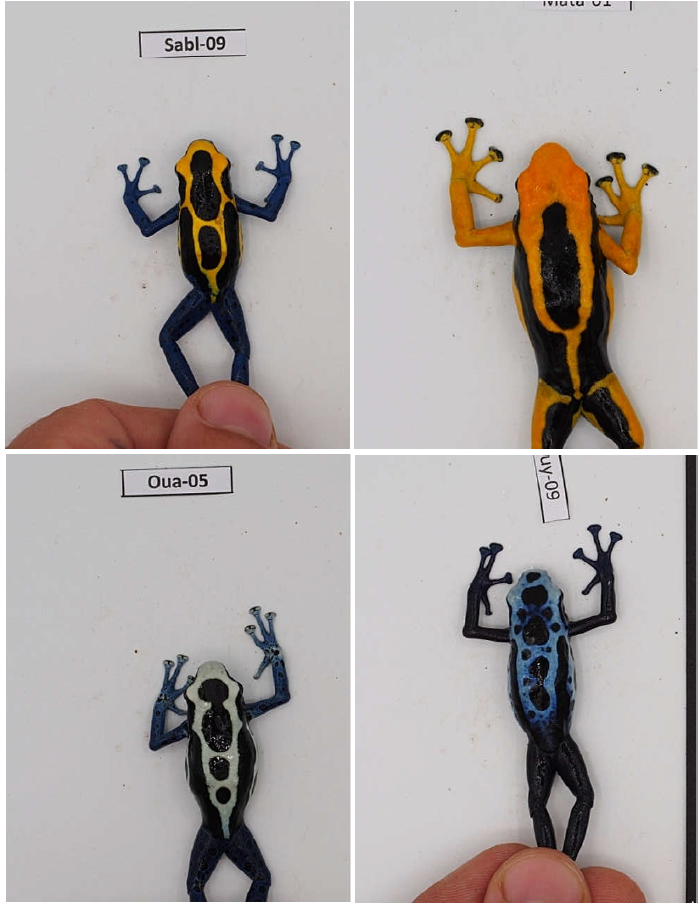
The colour matching involved a bit more work. When the frogs to be used in the experiment were collected from the wild, they were photographed from the top (see above) allowing us to see their dorsal patterns and colours. Unfortunately, we did not have a photo of the ventral side, so I had to speculate. We chose a single male individual for each morph to be copied into the models. Once the models finished printing, and we confirmed they didn’t have any weird printing artefacts, I started by coating the whole model with a white spray primer. On this primer and with the help of the dorsal photos, I drew the patterns of each morph with a pencil and painted the respective colours as close as possible to the original. I used some acrylic paints bought at the closest convenience store. Finally, when we were happy with the results, I sprayed on a couple of coats of a glossy varnish, to make the paint job more resistant to scratches and humidity. We were told by the salesman that the varnish did not have any odours, but we can’t really confirm or deny that is the case for the frogs.
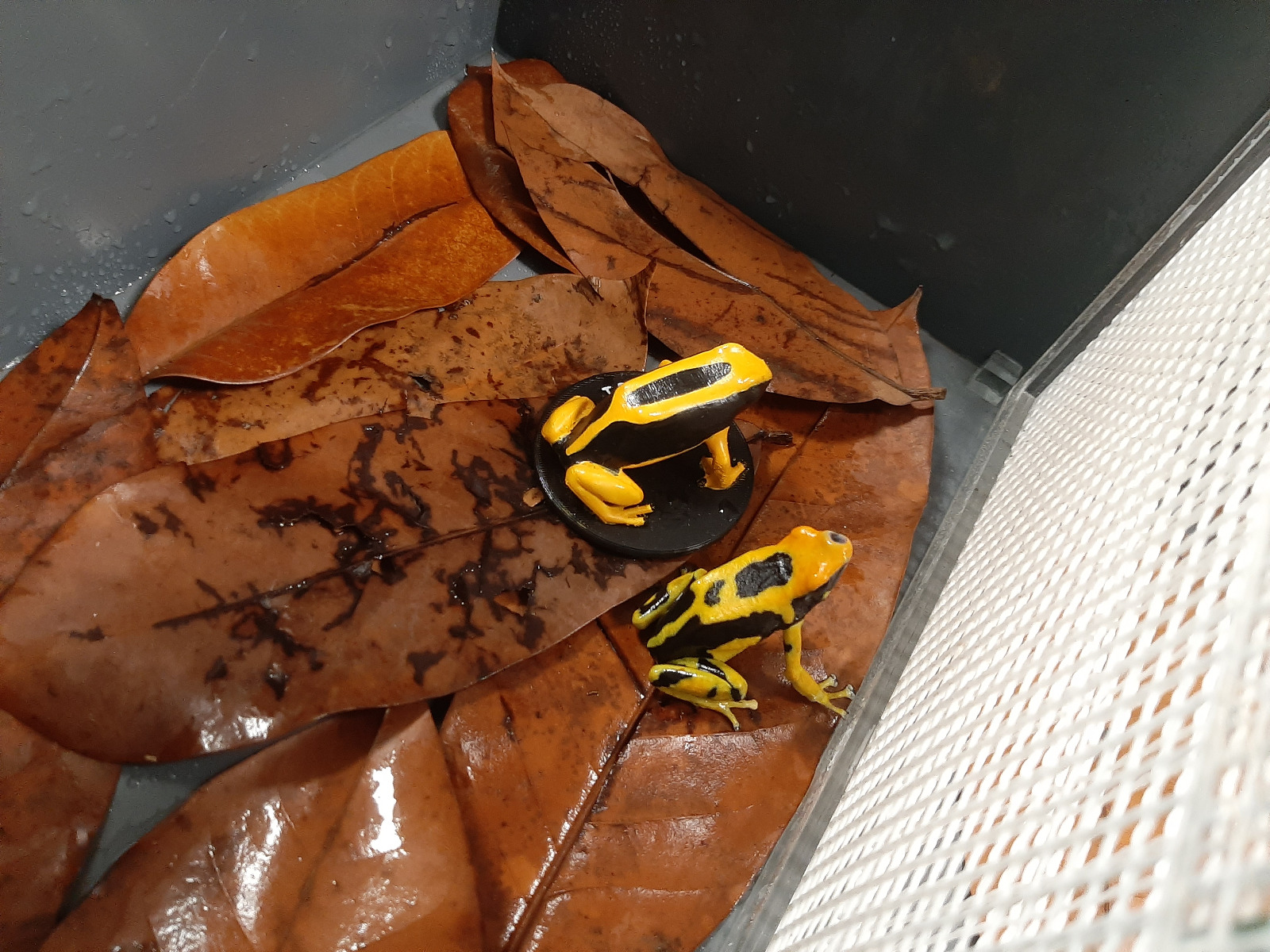
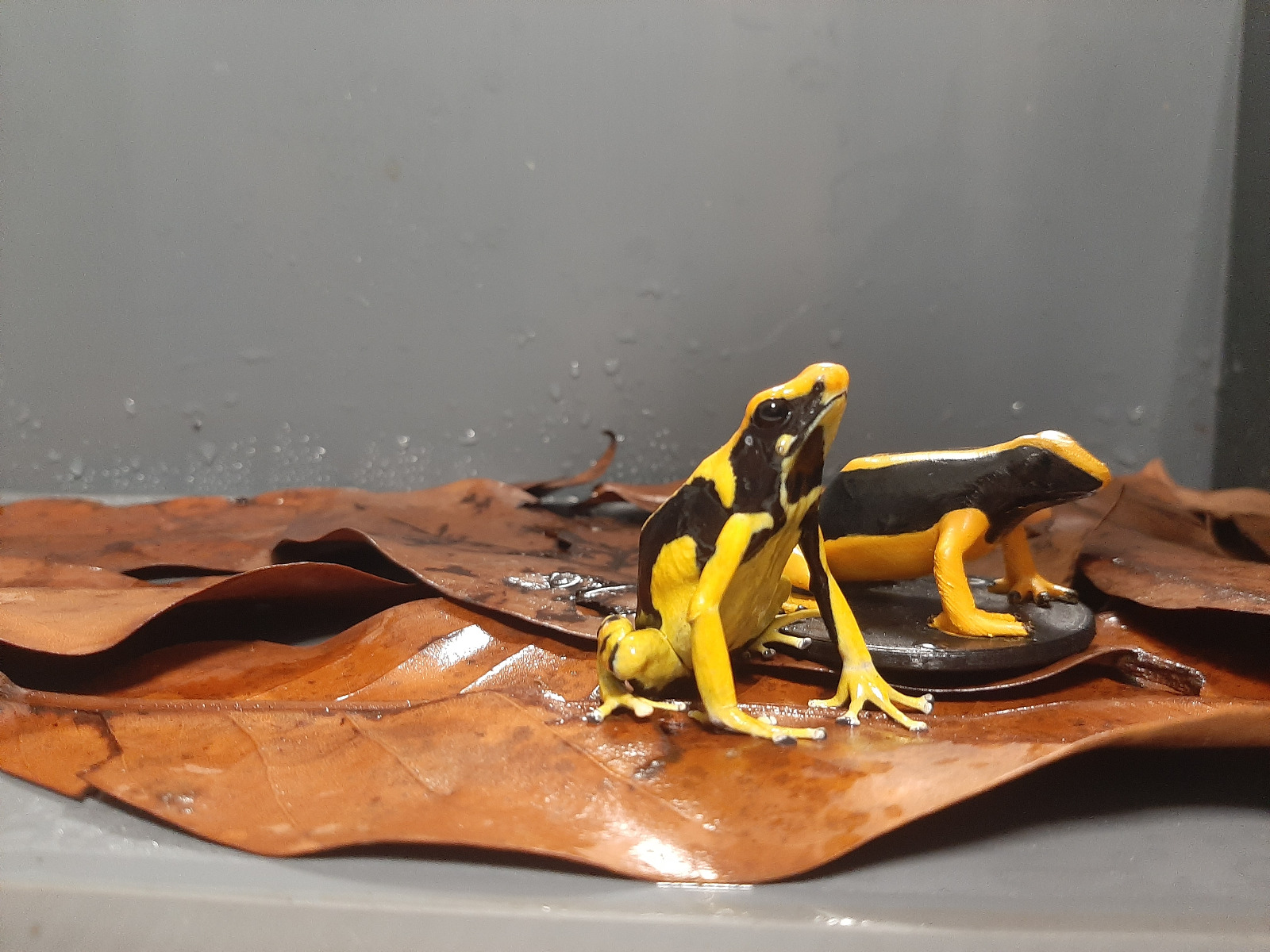
What was the end result? It seems to have worked. The results of the experiment itself are not yet published, but the study individuals appeared to have tried to interact with our models. And in the end, that was the goal!
Could we improve this for the future? I think this is an interesting topic to discuss. With the increasingly easy to obtain and use 3D printers, science and more specifically behaviour science could benefit from a repository of accurate 3D models of study species. Could something like this exist in the future? How hard is it to create an accurate model of a living organism?